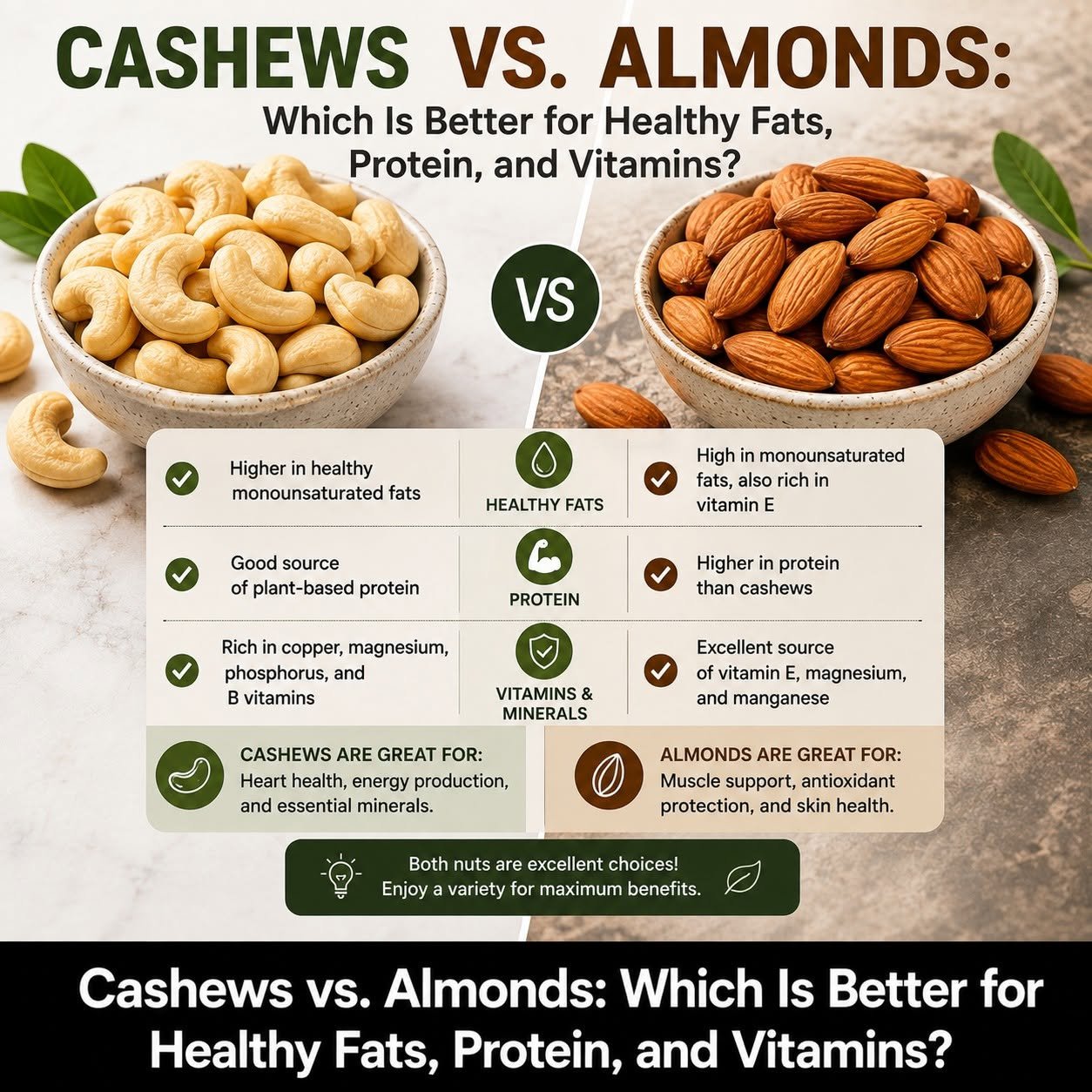
Both almonds and cashews can be excellent additions to a balanced diet, but they offer slightly different nutritional advantages. In a typical 28-gram serving, almonds provide about 6 grams of protein, 4 grams of fiber, and 14 grams of total fat, while cashews provide roughly 4 grams of protein, 1 gram of fiber, and 13 grams of fat. Both contain mostly unsaturated fats, which can be a valuable part of a heart-conscious eating pattern. Almonds stand out particularly for their vitamin E content, providing around 7.3 mg per ounce, while cashews provide considerably less vitamin E. This makes almonds especially appealing for people looking for a snack that combines protein, fiber, healthy fats, and antioxidant-related nutrients in one convenient food.
Cashews, however, have their own nutritional strengths. They provide magnesium, copper, iron, and zinc, making them a useful source of several essential minerals. A 28-gram serving supplies approximately 74 mg of magnesium, 1.7 mg of iron, and 1.6 mg of zinc. Almonds also contain magnesium and minerals, but their particularly strong advantage is their combination of fiber, vitamin E, protein, and monounsaturated fat. Neither nut is universally “better”—the smarter choice depends on your nutritional priorities. If you want more fiber and vitamin E, almonds have an advantage. If you are particularly interested in minerals such as copper and iron, cashews can be attractive. For either option, choosing unsalted varieties can help keep sodium intake lower, while reasonable portions are important because nuts are energy-dense foods.
Ultimately, the best choice may be the nut you enjoy enough to eat consistently as part of a varied diet. A small handful of almonds or cashews can work well as a snack, or you can combine both with fruit, yogurt, or whole-grain foods. Rather than searching for one “perfect” nut, rotating different nuts and seeds can provide a broader range of nutrients. USDA FoodData Central remains a reliable reference for comparing the nutritional composition of foods. People with nut allergies or medical conditions requiring specific dietary restrictions should follow individualized professional advice. Disclaimer: This article is for general educational and informational purposes only and does not constitute medical diagnosis, treatment, or personalized nutritional advice. Nutritional values can vary according to variety, processing, serving size, and preparation. Claims online may be exaggerated, incomplete, or unauthenticated, so always verify important nutrition information through reliable sources and consult a qualified healthcare professional when appropriate.
Leave a Reply