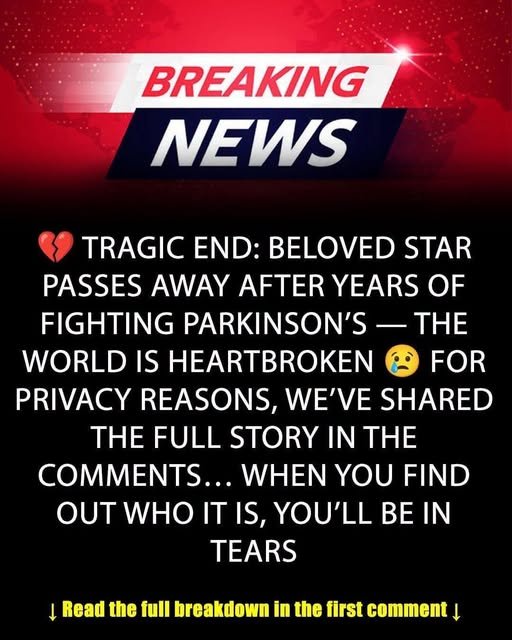
Social media platforms are saturated with generic “Breaking News” graphics designed to evoke immediate emotional distress and curiosity. Featuring urgent red banner branding, somber typography, and vague declarations like “TRAGIC END: BELOVED STAR PASSES AWAY…”, these images intentionally omit the public figure’s name. By claiming the details are hidden “for privacy reasons,” content creators exploit curiosity gaps to force users into checking comment sections or clicking external links.
This technique is a classic form of engagement farming and clickbait marketing. Pages post these vague graphics to drive thousands of clicks toward comment links that route users to ad-monetized blogs, affiliate storefronts, or potential phishing sites. The reference to Parkinson’s disease is often chosen strategically because high-profile figures—such as Michael J. Fox or Alan Alda—have publicly documented their journeys with the condition, making the fabricated headline feel plausible enough to trigger viral sharing.
Recognizing digital misinformation requires scrutinizing any post that conceals critical information while demanding user interaction. Authentic breaking news reports involving major celebrities or public figures are immediately named and covered across primary news networks and verified media channels, rather than gated behind vague social media graphics directing readers to a comment link. Practicing digital media literacy prevents the accidental amplification of spam networks and online hoaxes.
Leave a Reply