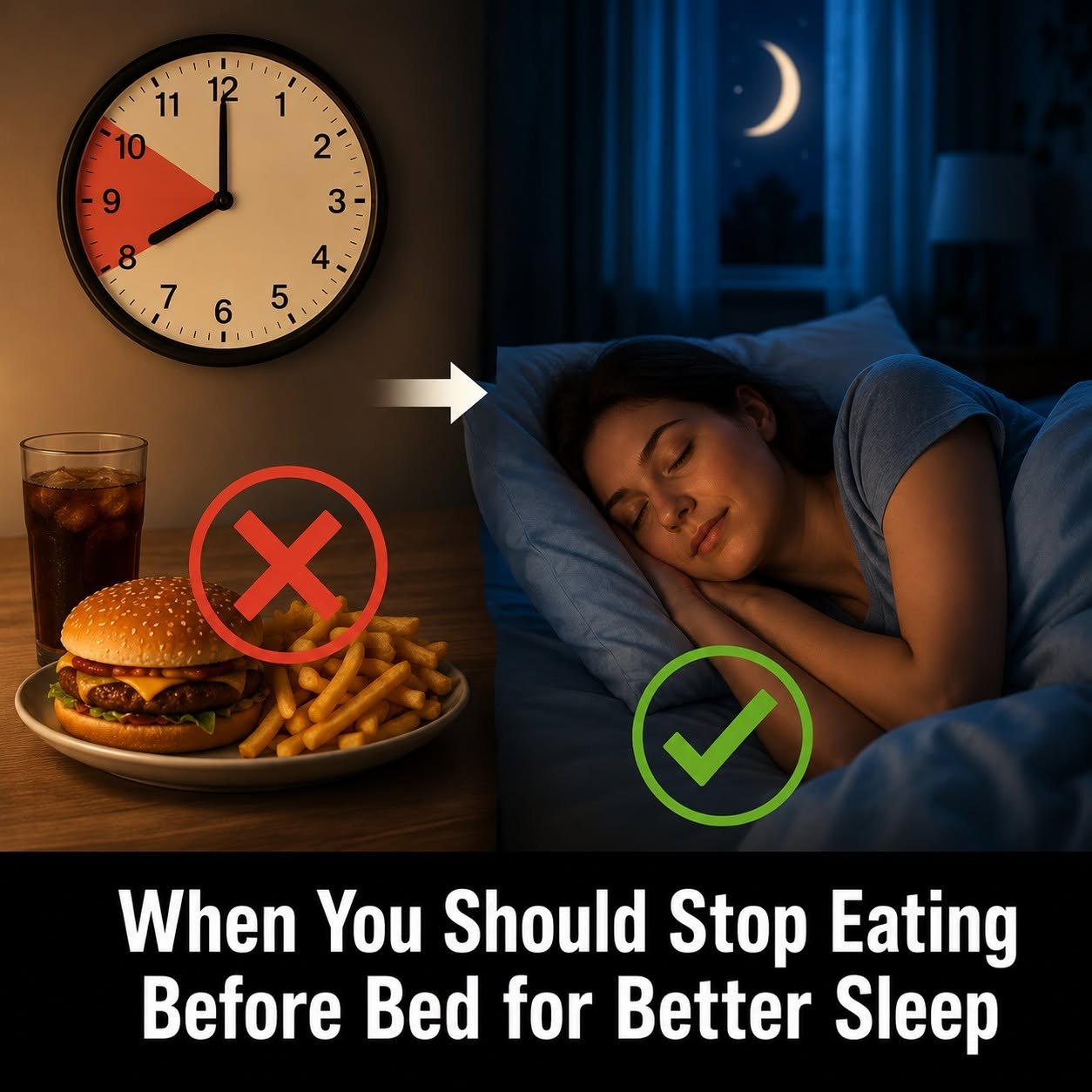
The timing of your evening meal may influence how comfortable you feel when you go to sleep. Finishing dinner around 2–3 hours before bedtime gives your body more time to digest before you lie down. This habit is particularly relevant for people who experience nighttime heartburn or acid reflux. The National Institute of Diabetes and Digestive and Kidney Diseases recommends eating meals at least three hours before lying down or going to bed when nighttime GERD symptoms are present. Lying down soon after eating can make it easier for stomach contents to move upward into the esophagus, potentially causing burning, sour taste, coughing, or discomfort. The American College of Gastroenterology similarly suggests avoiding meals within 2–3 hours of bedtime for people managing GERD.
Another reason to avoid a large meal immediately before bed is comfort. A heavy dinner can leave you feeling overly full when you are trying to relax, while late-night eating may be particularly troublesome for people prone to reflux. If you regularly experience nighttime symptoms, consider having dinner earlier and choosing a balanced meal rather than a very large, fatty, or spicy meal. Individual food triggers differ, but common reflux triggers can include high-fat foods, caffeine, chocolate, spicy foods, and acidic foods. It is also helpful to remain upright after eating instead of immediately lying down. Importantly, however, finishing dinner three hours before bed is not a guaranteed sleep-improvement technique for everyone. Its strongest evidence relates to reducing nighttime reflux symptoms, and people without reflux may not notice a dramatic difference in sleep simply from changing meal timing.
A practical routine could be to finish your evening meal 2–3 hours before your planned bedtime, keep portions comfortable, and give yourself time to wind down afterward. If you are hungry later, your individual nutritional needs may determine whether a small snack is appropriate. People with diabetes, pregnancy-related nutritional needs, or other medical conditions should follow personalized dietary guidance rather than unnecessarily restricting evening food. If nighttime heartburn occurs frequently, interferes with sleep, or is accompanied by difficulty swallowing, persistent vomiting, unexplained weight loss, or concerning chest pain, seek professional medical evaluation. Disclaimer: This article is for general educational and informational purposes only and does not constitute medical diagnosis, treatment, or personalized nutritional advice. Eating your last meal 2–3 hours before bed may help some people—especially those with nighttime reflux—but it is not guaranteed to improve sleep for everyone. Health and nutrition claims online may be exaggerated, incomplete, or unauthenticated, so always verify important information through reliable medical sources and consult a qualified healthcare professional when needed.
Leave a Reply