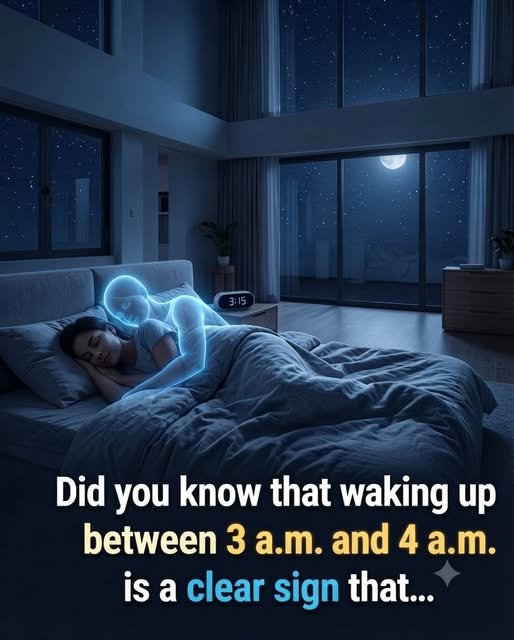
The image features an AI-generated scene of a sleeping woman overlaid with a glowing blue, spectral figure, paired with the text: “Did you know that waking up between 3 a.m. and 4 a.m. is a clear sign that…” This graphic represents a classic medical anxiety and supernatural crossover engagement template engineered to turn standard human physiology into a spooky or alarming mystery.
Anatomy of the Physiology & Clickbait Strategy
- The Scientific Reality: Waking up briefy around 3–4 a.m. is a standard part of normal human sleep architecture, not a omen or medical crisis. Most adults complete 90-minute sleep cycles; by 3:00 a.m., sleep shifts heavily into lighter REM stages. Factors like natural cortisol spikes, room temperature changes, blood sugar dips, aging, or mild sleep apnea commonly cause brief awakenings during this window.
- Supernatural & Fear Framing: By pairing a medical-sounding prompt with a glowing, ghost-like spirit, the image deliberately bridges two high-engagement niches: paranormal superstition (e.g., the “witching hour”) and self-diagnostic medical anxiety.
- The “Clear Sign That…” Cliffhanger: The sentence cuts off before revealing the answer. This artificial curiosity gap forces users to click into the comment section or follow external links to find out what “condition” or “spirit” is supposedly visiting them.
- Algorithmic Monetization: Universal relatable experiences (like waking up mid-night) make prime engagement hooks. Users flood the comments sharing their own sleep struggles, which boosts the post’s visibility and allows content networks to monetize traffic via ad-heavy blogs or pseudoscience remedies.
Leave a Reply