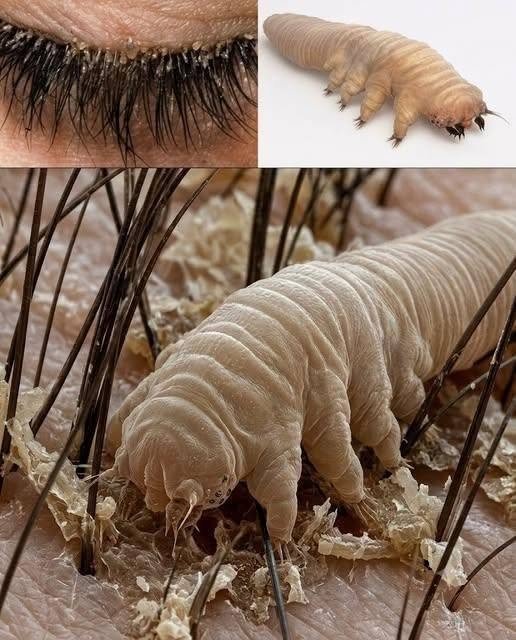
The image pairs close-up macro shots of human eyelashes with flaky crust along the lid margin alongside 3D biological renderings of microscopic skin parasites, paired with the incomplete clickbait hook “Here are the consequences of sleeping with…” This graphic represents a classic hygiene-shaming and disgust-based engagement template engineered to sensationalize ordinary human biology for viral reach.
Anatomy of the Organism & Clickbait Strategy
- Identification: The organisms shown are microscopic face mites (Demodex folliculorum and Demodex brevis). These microscopic arachnids live inside hair follicles and sebaceous glands on human faces (especially eyelashes, eyebrows, and noses). They are a completely normal part of the human skin microbiome—present on virtually all adult humans—and feed on dead skin cells and natural sebum.
- Pathologizing Normal Biology: While an overpopulation of Demodex mites can occasionally cause blepharitis (eyelid inflammation) or exacerbate rosacea, the post frames a harmless, ubiquitous microorganism as a terrifying “consequence” of poor hygiene, wet hair, or unwashed pillowcases.
- The Incomplete Sentence Hook: Leaving the caption unfinished (“Here are the consequences of sleeping with…”) pairs with electron-microscope style imagery to induce immediate disgust, forcing viewers to click “See More” or search the comments to figure out what behavior allegedly caused the “infestation.”
- Algorithmic Monetization: Disgust and skin anxiety are powerful drivers of social media interaction. Content networks deploy these close-up microscopic renderings to provoke visceral reactions, build page reach, and funnel viewers to ad-monetized sites selling unnecessary skin cleansers or eyelid scrubs.
Leave a Reply