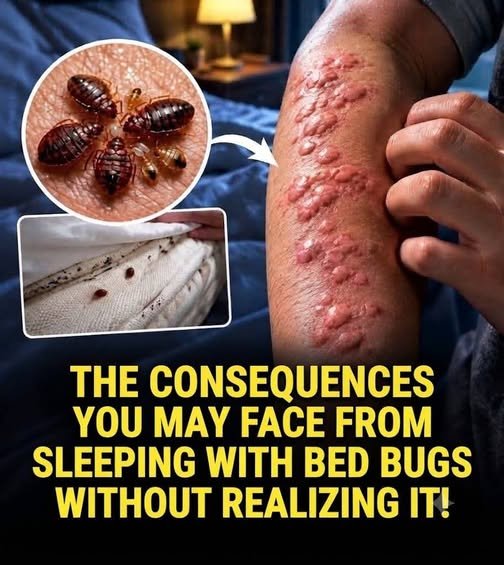
The image features an arm covered in severe, raised, confluent skin lesions next to inset graphics of bed bugs (Cimex lectularius) and a contaminated mattress seam, paired with text reading, “THE CONSEQUENCES YOU MAY FACE FROM SLEEPING WITH BED BUGS WITHOUT REALIZING IT!” This graphic represents a classic health anxiety and disgust-based clickbait template engineered to trigger visceral horror and mass sharing.
Anatomy of the Misinformation & Clickbait Strategy
- Medical Disconnect & Image Exaggeration: Real bed bug bites typically appear as small, itchy, red bumps often arranged in a line or cluster (“breakfast, lunch, and dinner” pattern). The severe, blistering rash depicted on the main arm photo does not represent a standard bed bug reaction; it resembles severe contact dermatitis, shingles, or an AI-generated extreme skin condition designed purely for graphic shock value.
- Sensationalized Fear Framing: By pairing graphic medical imagery with an alarming warning (“without realizing it”), the post targets the universal phobia of unseen parasites invading personal home spaces.
- The Suspense Narrative: The user prompt cuts off mid-sentence (“These Are the Consequences of Sleeping with…”), working in tandem with the visual shock to drive viewers to click “See More” or check the comment section for details.
- Monetization Funnel: Parasite anxiety is one of the highest-performing drivers of digital engagement. Content networks deploy these sensationalized graphics to build page traffic, farm likes and shares from panicked users, and direct traffic to ad-monetized blogs selling unverified pest control or medical remedies.
Leave a Reply