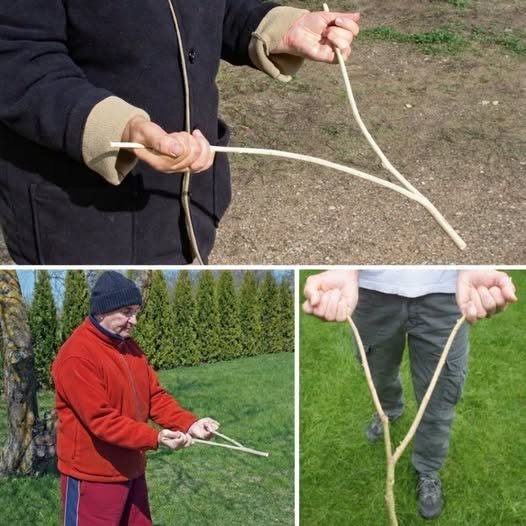
The traditional Y-shaped wooden stick depicted in the images is a classic dowsing rod, also historically known as a divining rod or water witching stick. For centuries, practitioners used these fork-shaped wooden branches—typically cut from hazel, willow, or peach trees—in a traditional folk practice intended to locate underground water sources, buried minerals, or hidden oil reserves. Dowsers hold the two split ends of the Y-rod firmly in their hands with palms facing upward, walking slowly across land until the pointed end suddenly dips downward, allegedly indicating the presence of hidden subterranean aquifers.
Historically, dowsing played a major role in rural community development, agricultural planning, and well-drilling before modern geological surveying technology existed. Proponents believed that natural earth energies, magnetic variations, or subtle physical resonances triggered the rod’s movement over hidden water tables. However, modern scientific studies attribute the movement of dowsing rods to the ideomotor phenomenon—a psychological effect where unconscious, minute muscular movements in the practitioner’s hands cause the delicate, tension-held wooden stick to pivot, creating the illusion of an external magnetic pull.
Appreciating traditional dowsing rods highlights how early human agricultural societies sought practical solutions for locating vital natural resources. While modern environmental engineering, hydrogeology, and advanced seismic imaging have replaced traditional divining rods for professional well installation, dowsing remains a fascinating subject of cultural folklore and rural history. Understanding the science behind the ideomotor effect allows individuals to respect ancient agricultural traditions while relying on evidence-based geological surveys to manage modern land, groundwater, and environmental resources efficiently.
Leave a Reply