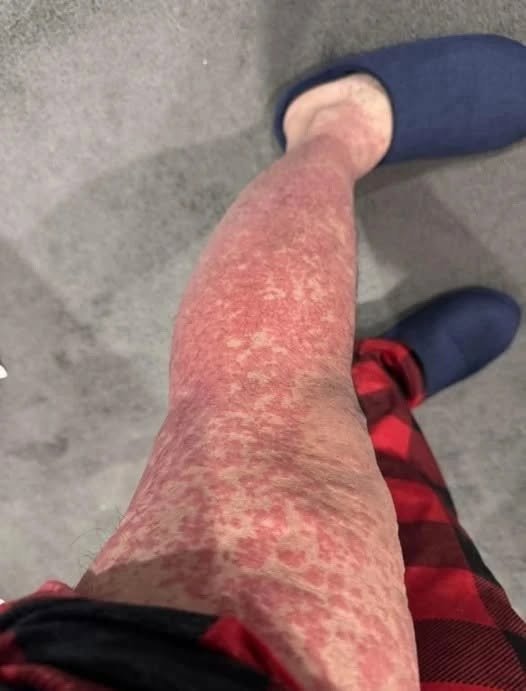
Sleeping with an electric heating pad turned on continuously can lead to severe skin reactions, chronic tissue inflammation, and accidental thermal injuries. The viral image displays a widespread, blotchy erythematous rash across the lower limb—a classic presentation of Erythema ab igne, colloquially known as toasted skin syndrome. This dermatological condition occurs when skin experiences repeated, long-term exposure to direct infrared radiation or low-level heat. While the heat source may not feel hot enough to cause an immediate acute burn, prolonged contact breaks down delicate epidermal capillaries and damages localized skin tissue over time.
Beyond thermal skin conditions, overnight use of unmonitored electric blankets or heating pads poses significant physiological risks and safety hazards. Continuous heat application can cause deep-tissue dehydration, systemic body temperature elevation, and localized skin inflammation that requires medical intervention. Furthermore, individuals with nerve damage, poor circulation, or deep sleep tendencies are particularly vulnerable, as they may fail to feel rising temperatures before tissue damage takes hold. In severe cases, faulty electrical wiring or overheating pads can create major fire hazards within domestic bedroom environments, emphasizing the critical need for proper thermal equipment usage.
Preventing heat-induced skin damage requires implementing strict bedtime safety protocols and adopting safer, non-thermal sleep habits. Consumers should avoid sleeping directly on heating devices and utilize products equipped with automated shut-off timers to prevent prolonged heat exposure. Replacing electric pads with insulated thermal blankets, proper room temperature regulation, or warm evening baths provides natural physiological warmth without burning delicate skin. Prioritizing safe thermal habits protects long-term skin health, eliminates painful inflammatory rashes, and ensures a secure, restful, and rejuvenating sleeping environment.
Leave a Reply