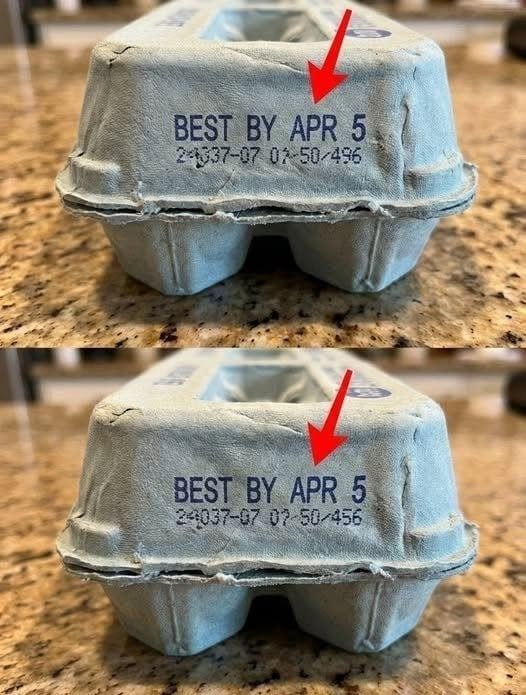
Egg cartons can contain several dates and codes, and understanding them can help shoppers make more informed decisions about freshness and food safety. Many people focus only on the printed date, but the wording and type of date matter. In the United States, for example, carton dates can include a “sell-by” date, while some cartons also display a “use-by” or “best-by” date depending on local regulations. These dates do not always mean the eggs suddenly become unsafe at midnight on that day. Proper refrigeration and handling are also essential.
One detail worth checking is the Julian date, a three-digit number that indicates the day of the year when the eggs were packed. For example, “001” represents January 1, while “365” represents December 31 in a non-leap year. This packing date can help consumers and retailers determine how long the eggs have been stored. The USDA explains that shell eggs can generally be refrigerated for 3 to 5 weeks after purchase when properly handled, even though quality may gradually decline over time. (fsis.usda.gov) Instead of assuming every printed number is an expiration date, look for wording such as “Sell By” or “EXP,” and check the carton for the packing code when available. Another important clue is the condition of the carton and eggs themselves. Cracked or dirty shells can increase food-safety concerns, while eggs should remain refrigerated at 40°F (4.4°C) or below. (fda.gov)
When buying eggs, choose cartons that are clean and undamaged and place them in the refrigerator promptly after shopping. Keeping eggs in their original carton can help protect them from absorbing odors and makes the printed information easy to reference. Avoid leaving refrigerated eggs at room temperature for extended periods, and cook eggs thoroughly when serving people who are particularly vulnerable to foodborne illness. The exact labeling system can differ between countries, so shoppers should follow the food-safety rules applicable to their location rather than relying on viral “secret date” claims. A date on an egg carton is useful information, but date interpretation, refrigeration, shell condition, and safe handling all work together to reduce food-safety risks.
Disclaimer: This article is provided for general educational purposes only. Egg-labeling requirements and date terminology vary by country and manufacturer, and a printed date alone cannot guarantee that food is safe or unsafe. Information may be general or unauthenticated and should be verified through reliable food-safety authorities and local regulations. When in doubt about damaged, improperly stored, or questionable eggs, follow official food-safety guidance.
Leave a Reply