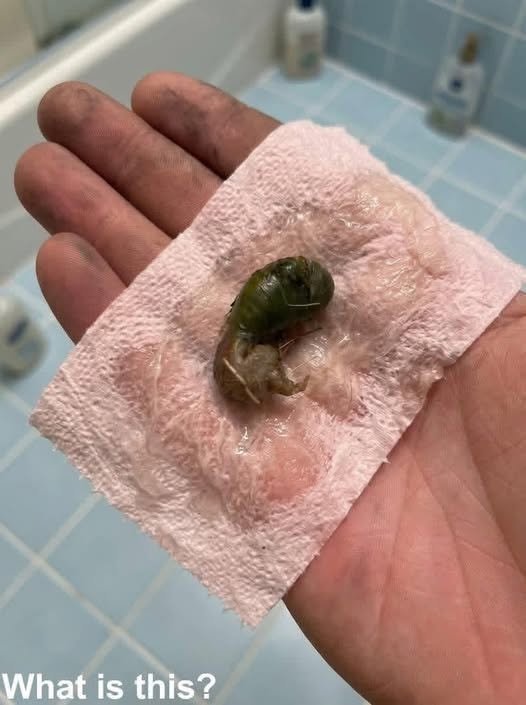
Finding a strange worm-like creature in the bathroom can be startling, but if it was small, soft-bodied, and appeared near a sink, shower, bathtub, or toilet, one of the most likely explanations is a drain-fly larva. These larvae are often mistaken for tiny worms because they are legless and elongated. They develop in the moist organic film that builds up inside drains and plumbing, feeding on bacteria, fungi, algae, and decaying material. The CDC has documented cases where people found these larvae in toilets and understandably suspected a human parasite, but laboratory identification showed that the organisms were free-living fly larvae—not parasites.
Drain-fly larvae are generally only a few millimeters long and can appear gray, translucent, or darker depending on the species and lighting. Adult drain flies are the tiny, fuzzy, moth-like insects that sometimes sit motionless on bathroom walls or around drains. If you’ve noticed those little flies around the bathroom as well, that makes a drain-related source more likely. Importantly, finding one of these larvae does not mean that it came from someone’s body or that the household has a worm infection. They are associated with damp plumbing and organic buildup rather than living inside humans.
If you continue finding them, the best approach is to investigate the drains rather than simply removing the visible creatures. Pay particular attention to the sink overflow, shower drain, bathtub drain, and any slow or rarely used drain. Physically cleaning the inside of the drain and removing the organic buildup can help eliminate the breeding site. If the object was much larger than a typical drain-fly larva, had obvious legs, or looked substantially different, it could be something else, so a clear close-up photograph with a ruler or coin for scale would be useful for identification. Disclaimer: This article provides general household and insect-identification information only. Without seeing the specimen, its identity cannot be confirmed. If you repeatedly find unusual organisms in the bathroom or have concerns about a possible human parasite, seek identification from a qualified healthcare or pest-control professional rather than relying on appearance alone.
Leave a Reply