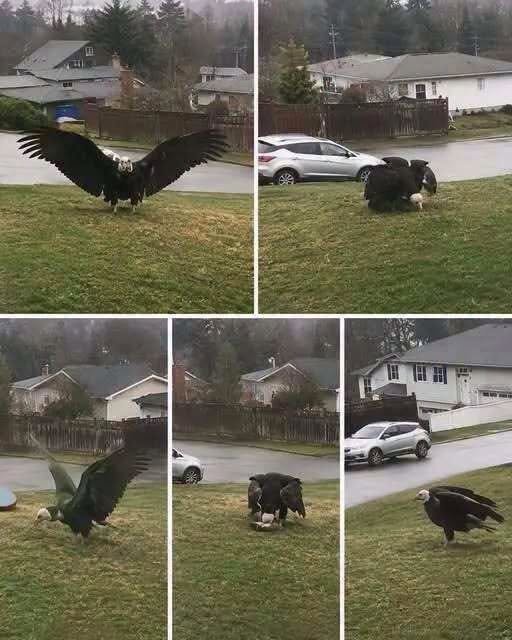
A viral headline claiming that a “giant eagle” was captured near Brownsville, Texas, has attracted attention online, with some versions describing an enormous bird with a wingspan of nearly 10 feet. Several low-quality websites repeat essentially the same story, claiming that hikers spotted the creature near the U.S.–Mexico border before wildlife specialists supposedly captured it for examination. One version even says scientists began studying its feathers, DNA, diet, and bone structure to determine whether it could represent an unknown species. The dramatic details certainly make the story sound like an extraordinary wildlife discovery, but there is an important reason to be cautious: the reports circulating online do not provide credible scientific documentation, named researchers, official wildlife-agency statements, or independently verifiable evidence confirming the existence of a previously unknown 10-foot eagle.
The idea of a truly enormous eagle naturally sounds believable because some extinct birds of prey were dramatically larger than modern eagles. For example, Haast’s eagle of New Zealand was a giant eagle that disappeared after the arrival and ecological changes associated with humans. Modern bald and golden eagles can also appear enormous when photographed from unusual perspectives, especially when perched close to a camera. A viral photograph can therefore create a powerful impression of extraordinary size without providing reliable measurements. Interestingly, an earlier viral “giant eagle captured in Brownsville” discussion on Reddit was challenged by commenters who identified the image as being from British Columbia rather than Brownsville, while others questioned whether the bird was even an eagle. This doesn’t prove what every newer image shows, but it demonstrates why location, scale, and species identification should be independently confirmed before accepting a sensational wildlife claim.
For now, the safest conclusion is that the “10-foot giant eagle of the border” story should be treated as unverified rather than as a confirmed scientific discovery. A genuine discovery of a previously unknown giant eagle in Texas would be an extraordinary event and would normally attract attention from recognized wildlife authorities, ornithologists, museums, universities, and conservation organizations. Until such sources provide evidence, readers should be careful about sharing the headline as established fact. The story is fascinating, but separating genuine wildlife discoveries from viral exaggerations is important—especially when dramatic claims involve supposedly revolutionary scientific findings. Disclaimer: This article is based on publicly circulating online reports, some of which make extraordinary claims without providing sufficient independent scientific evidence. The alleged giant eagle, its capture, measurements, and supposed research findings have not been independently verified from authoritative wildlife or scientific sources. Always verify viral wildlife stories through reliable scientific organizations before accepting or sharing them as fact.
Leave a Reply