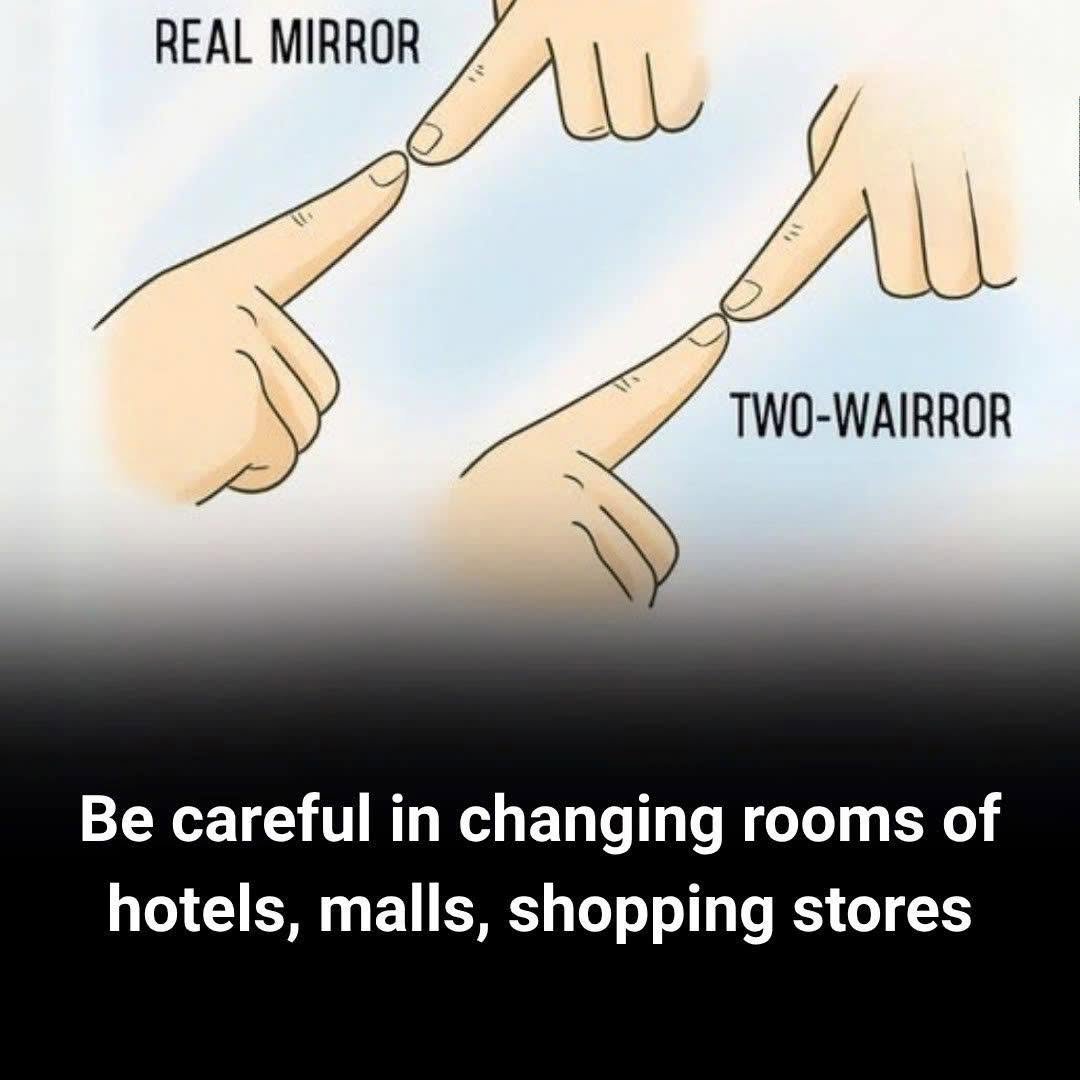
Two-way mirrors, sometimes called one-way mirrors or half-silvered mirrors, may look like ordinary mirrors, but their secret is actually based on a simple principle of light. Unlike a conventional mirror that reflects most of the incoming light, a two-way mirror has a much thinner, partially reflective coating. Some light is reflected while some passes through the glass. (indianapublicmedia.org) The fascinating part is that the mirror does not truly block vision in one direction. Instead, the difference in brightness between the two sides creates the illusion. When one room is brightly illuminated and the other is kept dark, people in the bright room mainly see their own reflection, while someone in the darker room can see through the glass toward the brighter space. (ipm.org)
This is why two-way mirrors have traditionally appeared in observation rooms, interrogation facilities, research environments, security applications, and entertainment settings. The person on the brightly lit side may see what looks like an ordinary mirror because the reflected light overwhelms the relatively small amount of light coming from the darker side. Meanwhile, observers in the dark room can see the illuminated subjects through the glass. (howstuffworks.com) But there is an important misconception: the mirror is not magically transparent in only one direction. If the lighting changes—such as turning on bright lights in the darker room—the effect can weaken or disappear, and people on both sides may become visible. (indianapublicmedia.org) In other words, lighting is the real “secret” behind the illusion, not a mysterious property that permanently makes one side invisible.
The same principle has interesting modern applications in smart mirrors, teleprompters, stage effects, display technology, and interior design. It also explains why viral claims about easily identifying every two-way mirror with a single “finger test” should be treated cautiously—the appearance of a mirror can depend on its construction, coating, mounting, and lighting conditions. A suspicious mirror in a private space should not automatically be assumed to be a surveillance device based on one simple test. The science itself, however, is fascinating: a carefully engineered coating combined with controlled illumination can make the same piece of glass appear to be a solid mirror from one side and a window from the other. Disclaimer: This article is for general educational information only. Two-way mirror technology can vary by manufacturer and application, and simple visual tests are not guaranteed to identify every type of glass. Always verify technical or privacy-related concerns through reliable sources and qualified professionals.
Leave a Reply