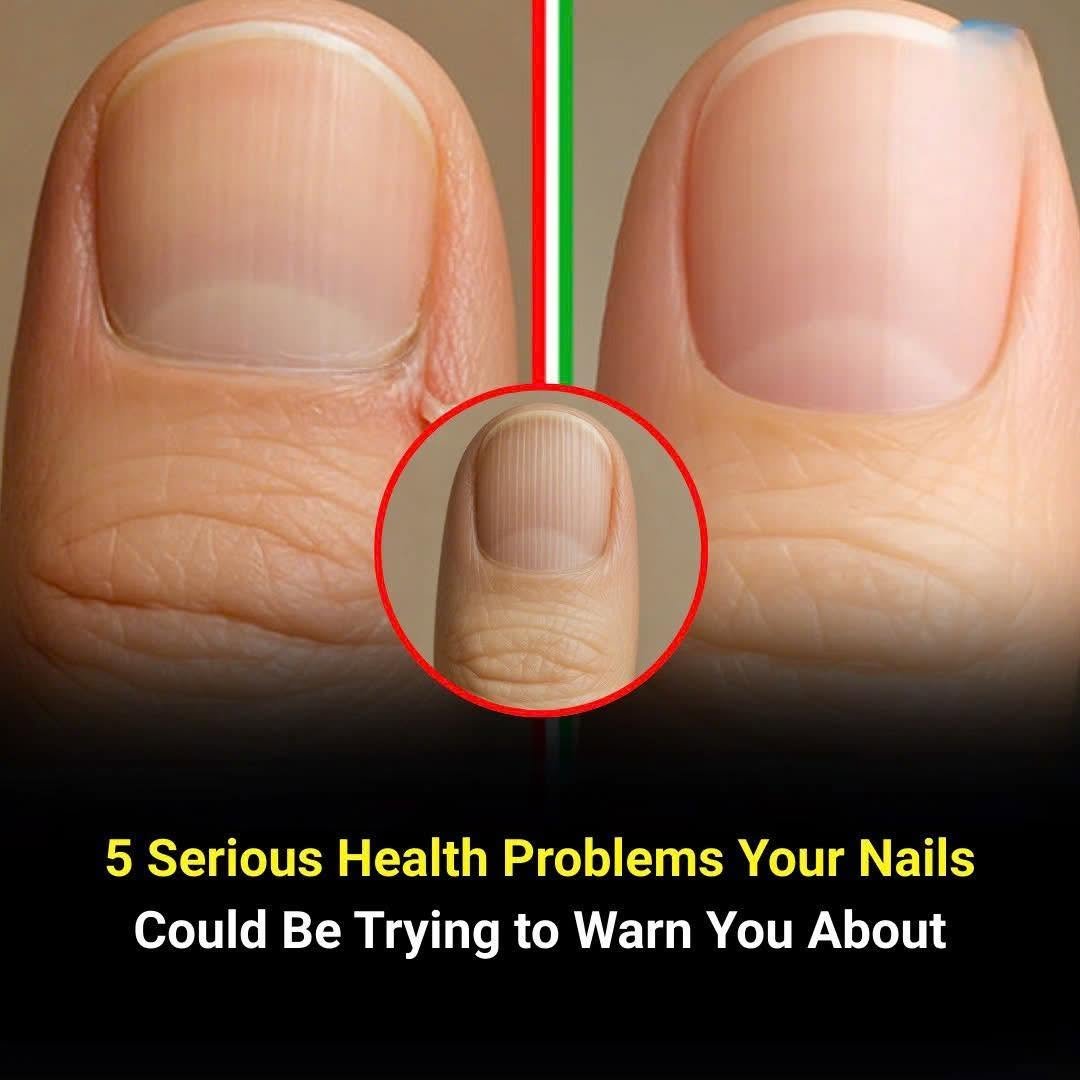
Your fingernails can sometimes provide clues about what is happening elsewhere in the body, although nail changes alone cannot diagnose a disease. Five changes that deserve attention include 1) spoon-shaped nails, which can be associated with iron-deficiency anemia; 2) nail clubbing, where the fingertips enlarge and the nails curve downward, which can sometimes occur with lung, heart, liver, or gastrointestinal conditions; 3) pitted nails, which may be associated with psoriasis, eczema, or alopecia areata; 4) Beau’s lines, horizontal grooves that can appear after an illness, infection, fever, injury, or other event temporarily interrupts nail growth; and 5) unusual nail discoloration, including persistent yellowing, whitening, or a new dark streak. These changes can have completely harmless explanations, but a new or unexplained pattern is worth discussing with a healthcare professional.
One particularly important warning sign is a new or changing dark streak underneath a fingernail or toenail. Most dark marks are not melanoma, and injuries can also cause pigmentation or bleeding beneath a nail. However, the American Academy of Dermatology recommends having a new or changing dark streak examined because melanoma can occasionally develop beneath a nail. Yellow, thickened, brittle, or separating nails are much more commonly related to fungal infections, injury, psoriasis, or other nail disorders, but persistent changes may still require evaluation. Similarly, a pale or unusually white nail does not automatically indicate liver or kidney disease; nail appearance must be interpreted alongside medical history, examination, and sometimes laboratory testing.
The best approach is to notice changes without assuming the worst. Healthy nails are generally smooth, consistent in color, and firmly attached to the nail bed, although harmless vertical ridges can become more noticeable with age. Make an appointment with a doctor or dermatologist if a nail develops a persistent color or shape change, becomes thick or separated, develops unexplained bleeding or swelling, stops growing, or develops a new or changing dark streak. A professional can determine whether the change is caused by an infection, nutritional deficiency, injury, skin condition, medication, or an underlying medical problem. Disclaimer: This article is for general educational information only and does not constitute medical diagnosis, treatment, or personalized advice. Nail changes can have many harmless causes and cannot diagnose a health condition by themselves. Always verify important health information through reliable medical sources and consult a qualified healthcare professional about persistent or concerning changes.
Leave a Reply