Category: Uncategorized

  • Scott Bryce (1958–2026)

    Scott Bryce (1958–2026)

    This memorial photo honors actor Scott Bryce, who passed away on July 12, 2026, at age 68 following a battle with cancer.

    Key Career Highlights

    • Daytime Television: Best known for originating the role of the charismatic antihero Craig Montgomery on CBS’s As the World Turns, a role he played across several decades (1982–1991, 1993–1994, 2007–2008). His performance earned him two Daytime Emmy Award nominations for Outstanding Lead Actor.
    • Primetime & Film: Appeared in prominent roles across major series, including Murphy Brown, The Facts of Life, Popular, Sex and the City, Blue Bloods, and The Blacklist, as well as feature films like Lethal Weapon 3.
  • Deconstructing Celebrity Hoax Clickbait: The Anonymous Death Announcement

    Deconstructing Celebrity Hoax Clickbait: The Anonymous Death Announcement

    The graphic presents a generic “Breaking News” template proclaiming the death of a “beloved star” following a battle with Parkinson’s disease, withholding the individual’s identity under the pretext of “privacy reasons.” This image represents an archetypal clickbait engagement trap engineered to exploit public sympathy and curiosity for algorithmic manipulation.

    The operational strategy relies on emotional leverage and deliberate ambiguity to force user interaction. By keeping the subject anonymous while invoking a serious illness, the post creates a severe curiosity gap that entices users to investigate. Claims of withholding a name for “privacy reasons” while simultaneously promising “the full story in the comments” serve as a contradiction designed solely to bypass initial platform filters. In reality, legitimate news outlets publish identified, verified obituaries immediately rather than funneling readers into comment sections through vague, emotionally charged prompts.

    These campaigns operate as high-volume monetization engines for spam networks and content farms. Directing traffic to the comment section or external links drives up engagement metrics, tricking social media algorithms into giving the post broader distribution. Once users click the links provided in the comments, they are redirected to ad-heavy websites, affiliate marketing landing pages, or malicious domains, generating ad impressions and digital revenue through deceptive click-farming practices.


  • Deconstructing Health Clickbait: The Underwear Hygiene Engagement Trap

    Deconstructing Health Clickbait: The Underwear Hygiene Engagement Trap

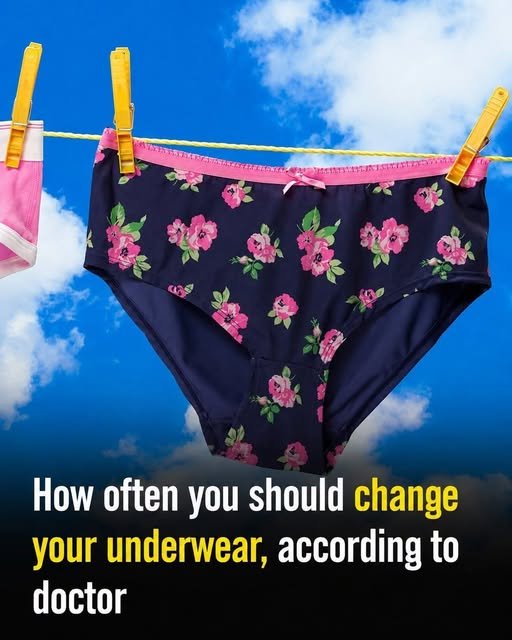
    The image features underwear drying on a clothesline accompanied by the sensationalized text, “How often you should change your underwear, according to doctor.” This graphic represents a classic clickbait engagement template designed to exploit everyday personal habits to drive digital traffic and platform revenue.

    The core mechanism of this graphic relies on manufacturing a artificial “debate” around universally understood personal hygiene routines. By appealing to basic curiosity and health-related anxiety, content creators present straightforward medical advice as a hidden secret or controversial subject. Dermatologists and medical professionals unanimously recommend changing undergarments daily—or immediately following physical exercise—to prevent bacterial accumulation, moisture buildup, and skin irritation. Claiming that this simple practice is a matter of ongoing debate is a deliberate tactic to lure users into the comment section to state the obvious, which rapidly artificially inflates the post’s metrics.

    These social media templates leverage automated algorithms by farming high volumes of user engagement. When individuals leave comments or share the graphic to express disbelief or confirm basic hygiene standards, social media algorithms register the activity as high-value content, increasing its reach across user feeds. This system allows publisher channels to monetize basic, repackaged medical information through ad impressions and link-click conversion strategies without offering substantive value.

  • Deconstructing Nostalgia Clickbait: The Clip-On Earring Engagement Trap

    Deconstructing Nostalgia Clickbait: The Clip-On Earring Engagement Trap

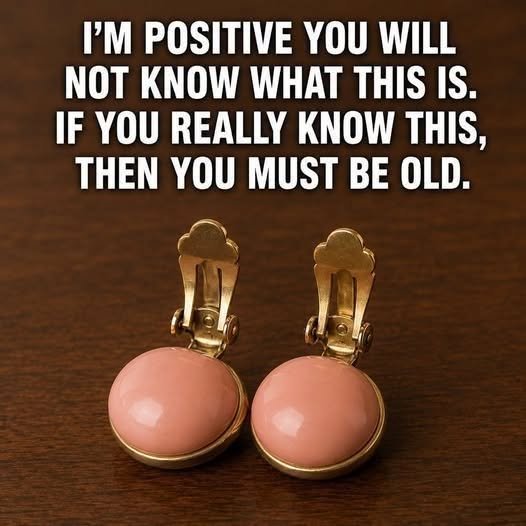
    The image displays a pair of vintage clip-on earrings overlaid with text claiming “I’m positive you will not know what this is. If you really know this, then you must be old.”

    Analyzing the Engagement Strategy

    • The Fake Nostalgia Challenge: Clip-on earrings—invented in the early 20th century and widely popular throughout the 1950s through the 1990s—are universally recognized objects. The claim that younger audiences will fail to identify everyday jewelry is a manufactured challenge designed to provoke readers.
    • The Ego-Driven Response Trap: By directly insulting or challenging the viewer’s age and memory (“You must be old” or “You won’t know this”), the meme incentivizes users to comment defensively. People react by naming the object, sharing personal anecdotes, or tagged family members to prove the image wrong.
    • Algorithmic Manipulation: Content creation pages rely on simple, highly recognizable household artifacts or nostalgic items (such as cassette tapes, rotary phones, or clip-on earrings) to farm comments. High comment volume signals high engagement to platform algorithms, artificially boosting page reach and digital ad revenues.
  • This is an antique veterinary mouth gag (or drenching bit) made by Dr. LeGear’s Stock Remedies out of St. Louis, Missouri.

    This is an antique veterinary mouth gag (or drenching bit) made by Dr. LeGear’s Stock Remedies out of St. Louis, Missouri.

    It was an essential farming tool used in the late 19th and early 20th centuries to safely treat livestock—primarily horses and cattle.

    How It Worked

    • Mouth Speculum / Gag: The heavy cast-iron frame was placed in the animal’s mouth, and the leather strap buckled securely behind the ears/poll to keep the bit in place.
    • Administering Doses & Pills: The hollow cone/funnel section on the bottom allowed farmers or veterinarians to pour liquid medicine (“drenches”), insert large bolus pills, or pass a stomach tube safely down the animal’s throat without the risk of getting bitten.
    • Dental Inspection: It was also used to hold the animal’s jaw propped open to inspect teeth or remove lodged food/foreign objects.

    Dr. L.D. LeGear was a prominent veterinary surgeon in the early 1900s who built a massive livestock medicine business out of St. Louis, producing everything from wormers to specialized drenching tools like this one.

  • Debunking Viral Myths: The Val Kilmer “Death Hoax”

    Debunking Viral Myths: The Val Kilmer “Death Hoax”

    This graphic featuring actor Val Kilmer alongside the caption “Legendary Voice That Once Ruled the Charts Is Gone… Rest In Peace (1959–2025)” is a fabricated celebrity death hoax and standard clickbait.

    The Reality Behind the Graphic

    • Status: Val Kilmer is alive. Claims that he passed away are entirely false rumors manufactured to exploit public interest.
    • Mismatched Description: The headline vaguely refers to a “Legendary Voice That Once Ruled the Charts,” attempting to confuse readers by implying a famous singer died, while placing Val Kilmer’s image in the background to drive shock value.
    • Health Context: While Kilmer famously survived a battle with throat cancer in the mid-2010s—which severely impacted his speaking voice—he remains alive and continues to work on artistic projects, including publishing poetry and managing his art studio.
    • The Engagement Strategy: Social media pages regularly design fake obituary templates featuring well-known actors or musicians paired with arbitrary dates to trigger emotional reactions, comments, and shares to monetize platform algorithms.
  • Debunking Viral Myths: The “Teen Sentenced to 452 Years” Clickbait

    Debunking Viral Myths: The “Teen Sentenced to 452 Years” Clickbait

    This post featuring courtroom photos of a crying young man paired with the headline “Teen Sentenced to 452 Years in Prison After He Ra…” is a classic clickbait engagement trap.

    The Reality Behind the Graphic

    • Fabricated Story & Sentence: No court sentenced a teenager to a 452-year prison term under these circumstances. The claim is part of a widespread viral hoax that pairs real court footage with fabricated AI audio or dramatic clickbait headlines.
    • The Cut-Off Headline Trick: Cutting off the word midway (“Ra…”) is a deliberate tactic to create outrage and suspense, driving users to click spam links or engage in the comments section to find the “rest of the story”.
    • Reused Courtroom Imagery: Social media pages frequently recycle photos of emotional defendants from entirely unrelated cases—often using old footage of different trial hearings or bond court appearances—and slap fake outrage-inducing captions over them to generate traffic.
    • Monetization Drive: These templates are published by automated content farms. The surge in user comments and shares tricks social media algorithms into promoting the post, driving monetization for the page.
  • Debunking Viral Myths: The COVID-19 Vaccine Medical Scares

    Debunking Viral Myths: The COVID-19 Vaccine Medical Scares

    This X-ray/CT style graphic featuring a glowing, fiery orange organ in the abdominal region paired with the incomplete text “Warning: People vaccinated against COVID-19 may…” is an engagement-baiting clickbait graphic.

    The Reality Behind the Graphic

    • Stock Illustration, Not Medical Scans: The image is a 3D digital stock rendering or AI illustration depicting localized inflammation/tumors on an abdominal organ (such as the kidney or stomach). It is not an authentic clinical scan of a vaccinated individual.
    • The Cut-Off Headline Trick: Ending the warning mid-sentence (...) creates a dramatic curiosity gap. It relies on health-related anxiety to force viewers into clicking external links, checking comment sections, or sharing the post out of panic.
    • Manufactured Health Scares: These templates routinely cycle through sensational headlines—claiming vaccines cause sudden organ damage, glowing blood, or hidden terminal conditions—none of which are backed by established medical science or global public health monitoring.
    • Monetization Strategy: Automated social media pages post alarming medical graphics to farm comments and shares, boosting algorithmic reach to drive ad traffic to external sites.
  • Debunking Viral Myths: The “Doctors Reveal Avocados Cause…” Clickbait

    Debunking Viral Myths: The “Doctors Reveal Avocados Cause…” Clickbait

    This image showing sliced avocados paired with the cut-off text “Doctors reveal that eating avocados causes…” is a classic clickbait engagement trap.

    The Reality Behind the Graphic

    • The Incomplete Sentence Technique: Ending the headline mid-sentence with an ellipsis (...) is a deliberate psychological hook. It creates a curiosity gap designed to trick users into clicking a link, opening spam-filled comments, or sharing the post to find out what was supposedly “revealed.”
    • No Medical Danger: There is no hidden health crisis or sudden medical warning regarding avocados. They are nutrient-dense superfoods packed with heart-healthy monounsaturated fats, fiber, potassium, and vitamins C, E, and B6.
    • The Comment Section Trap: These posts are distributed by automated monetization pages. When users ask “Causes what?” in the comments, the surge in activity signals to social media algorithms that the post is engaging, artificially driving it into more feeds.
  • Debunking Viral Myths: The Justin Bieber “Before & Now” Fake Image

    Debunking Viral Myths: The Justin Bieber “Before & Now” Fake Image

    This graphic claiming Justin Bieber admitted to testing positive for a mystery illness—paired with a sunken, severely aged “Now” image—is an edited clickbait photo hoax.

    The Reality Behind the Graphic

    • Digitally Altered Image: The image labeled “NOW” is a heavily manipulated version of a real paparazzi photo. Editors used digital filters and editing software to hollow out his cheeks, add dark under-eye circles, discolor his skin, and exaggerate facial lines to make him look emaciated.
    • The Cut-Off Headline Trick: Leaving the text unfinished (“tested positive for…”) is a classic engagement-bait technique. It relies on curiosity and shock value to trick users into clicking links, opening spam-filled comment sections, or sharing the post.
    • Actual Medical History: While Bieber has spoken openly about real health struggles over the years—including his diagnosis with Lyme disease and Ramsay Hunt syndrome (which caused temporary facial paralysis)—this graphic does not represent his appearance and is manufactured solely to farm views.