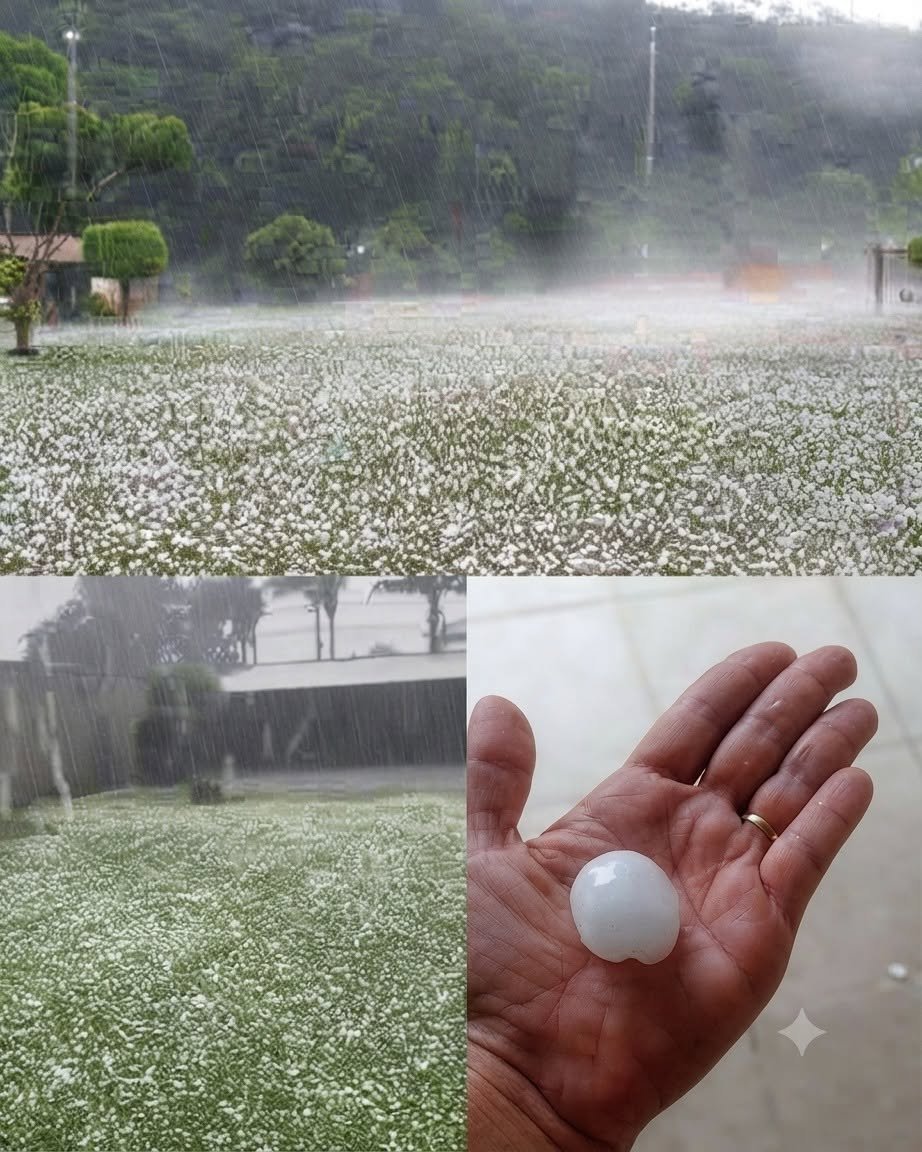
Severe hailstorms represent one of the most destructive localized meteorological events, often developing rapidly during intense thunderstorm activity. When powerful updrafts lift water droplets into freezing layers of the upper atmosphere, layered ice pellets accumulate size before plunging to the ground. In cases of severe weather events—such as major hailstorms recorded in regional areas like Viçosa in Minas Gerais or Anitápolis in Santa Catarina, Brazil—large ice stones can blanket lawns, shatter roofs, and disrupt local infrastructure within minutes.
The physical impact of large hail can cause significant damage to residential properties, agricultural crops, and personal vehicles. Beyond immediate surface destruction, massive hail accumulations frequently cause localized flooding as melting ice blocks drainage systems. Emergency services and local authorities typically respond to severe occurrences by distributing emergency tarps, clearing debris, and evaluating structural hazards for affected residents.
Staying safe during severe hail events requires monitoring real-time weather alerts and seeking immediate shelter inside sturdy structures away from windows and glass doors. Vehicle owners are advised to seek covered parking during severe thunderstorm warnings to prevent structural and windshield damage from falling ice.
Leave a Reply