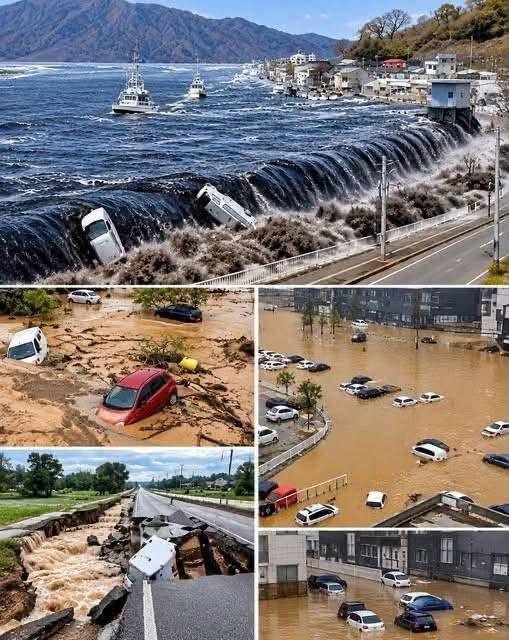
On March 11, 2011, a devastating 9.1-magnitude undersea megathrust earthquake struck off the coast of Honshu, Japan, triggering powerful tsunami waves that struck coastal cities including Minamisoma, Miyako, Kesennuma, Ishinomaki, and Natori. The colossal waves overtopped sea defense walls, engulfing urban infrastructure, washing away vehicles, and carrying massive amounts of debris several miles inland.
The disaster destroyed thousands of structures and displaced hundreds of thousands of residents across northeastern Japan’s Tōhoku region. Beyond the immediate physical devastation to coastal municipalities, the inundation crippled critical infrastructure, notably triggering power loss and subsequent meltdowns at the Fukushima Daiichi Nuclear Power Plant located nearby.
In response to the tragedy, Japan undertook one of the largest reconstruction and disaster mitigation programs in modern history, implementing taller seawalls, upgraded early-warning systems, and redefined urban zoning rules along the Pacific coastline. Today, these impacted cities stand as global reference points for natural disaster preparedness, resilient engineering, and coastal risk management.
Leave a Reply