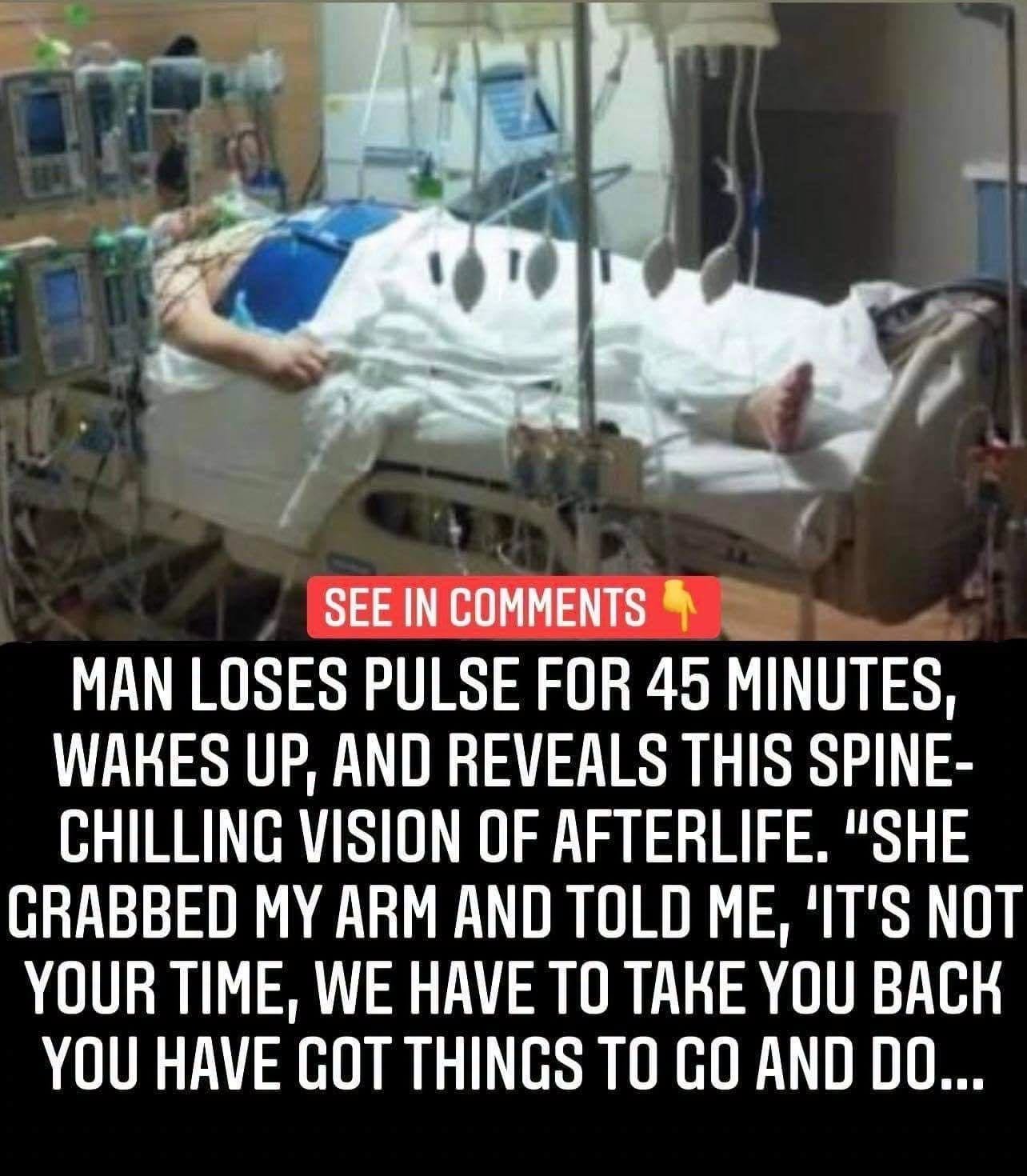
Digital media platforms frequently feature dramatic intensive care unit stock photography—such as an intubated hospital patient surrounded by monitoring equipment—paired with sensationalized quotes like “ICU nurse confirmed ‘he had no heart rate, he had no blood pressure, he had no pulse’” and headlines reading “MAN LOSES PULSE FOR 45 MINUTES, WAKES UP, AND REVEALS THIS SPINE-CHILLING VISION OF AFTERLIFE”. These viral posts rely on dramatic resuscitation claims, spiritual intrigue, and emotional cliffhangers to bypass automated content filters, incite intense religious and philosophical debates, and drive rapid social media sharing and ad-monetized click-through rates rather than offering accurate neuro-critical care or cardiac resuscitation education.
From a critical care cardiology and neuroscience perspective, reports of complex near-death experiences (NDEs) following prolonged cardiac arrest stem from established biological and physiological processes during brain hypoxia. When a person undergoes cardiac arrest, blood circulation ceases, leading to rapid oxygen deprivation in the cerebral cortex. During active CPR or temporary return of spontaneous circulation (ROSC), minimal or fluctuating cerebral blood flow can sustain residual neural activity. Neurobiological studies show that as the brain experiences acute oxygen surges or profound failure during resuscitation, dying neurons fire wildly, producing vivid visual hallucinations, feelings of detachment, hyper-lucid memories, or perceptions of light and deceased figures. Content-farming networks systematically take these documented neurological phenomena during medical resuscitation (such as the viral 2014 case of Ohio driver Brian Miller), strip away the surrounding physiological parameters, and recast them as supernatural afterlife revelations purely to manipulate social media engagement algorithms and maximize digital ad revenue.
Navigating stories of cardiac resuscitation and near-death phenomena effectively relies on evidence-based emergency medicine and neuro-critical care research rather than accepting sensationalized viral headlines at face value. In clinical settings, successful resuscitation after extended circulatory arrest depends heavily on immediate, high-quality cardiopulmonary resuscitation (CPR), rapid defibrillation, and advanced post-cardiac arrest care to protect brain function. Understanding how clickbait algorithms weaponize existential curiosity and survival stories helps online audiences evaluate viral media with critical media literacy. For verified scientific insights into near-death experiences, resuscitation protocols, or cardiac health, consulting board-certified cardiologists, neurologists, or established medical journals provides authoritative, scientifically grounded information.
Leave a Reply