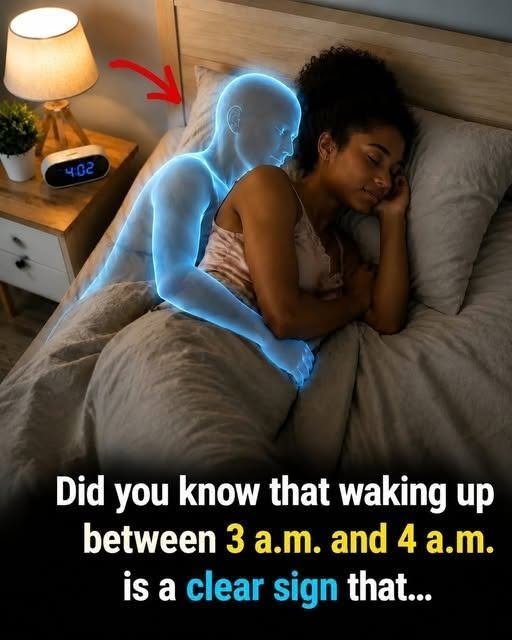
Digital media platforms frequently feature dramatic visual artwork—such as an glowing, translucent figure embracing a sleeping individual alongside a bedside clock displaying 4:02—paired with truncated, open-ended hooks like “Did you know that waking up between 3 a.m. and 4 a.m. is a clear sign that…”. These viral posts rely on censorial sentence truncation, supernatural or spooky imagery, and fear-driven curiosity to bypass automated content filters, provoke middle-of-the-night anxiety, and drive rapid social media sharing and ad-monetized click-through rates rather than offering scientific sleep education.
From a somnology and circadian biology perspective, waking up between 3 AM and 4 AM is a completely normal physiological phenomenon dictated by human sleep architecture. Throughout the night, human sleep cycles through 90-minute intervals of light sleep, deep sleep, and Rapid Eye Movement (REM) sleep. As morning approaches, core body temperature rises, stress hormones like cortisol naturally begin to ascend to prepare the body for waking, and deep slow-wave sleep decreases while lighter REM cycles predominate. This natural shift makes individuals far more susceptible to brief awakenings caused by minor environmental disturbances, anxiety, blood sugar fluctuations, or sleep apnea. Content-farming networks systematically take these routine physiological transitions and recast them in mystical, paranormal, or severe diagnostic framing purely to manipulate platform distribution algorithms and maximize digital ad revenue.
Managing nocturnal awakenings and improving sleep hygiene relies on evidence-based somnology practices rather than succumbing to supernatural internet folklore. Recommended sleep optimization strategies include maintaining a consistent sleep schedule, limiting caffeine and heavy meals late in the evening, keeping the bedroom dark and cool, and avoiding smartphone or screen exposure during middle-of-the-night wakeups. Understanding how clickbait algorithms exploit common sleep disruptions helps online audiences evaluate viral wellness claims with critical media literacy. For verified diagnostic evaluations of chronic insomnia, nighttime panic, or obstructive sleep apnea, consulting a board-certified sleep specialist or primary care physician provides authoritative, scientifically grounded care.
Leave a Reply