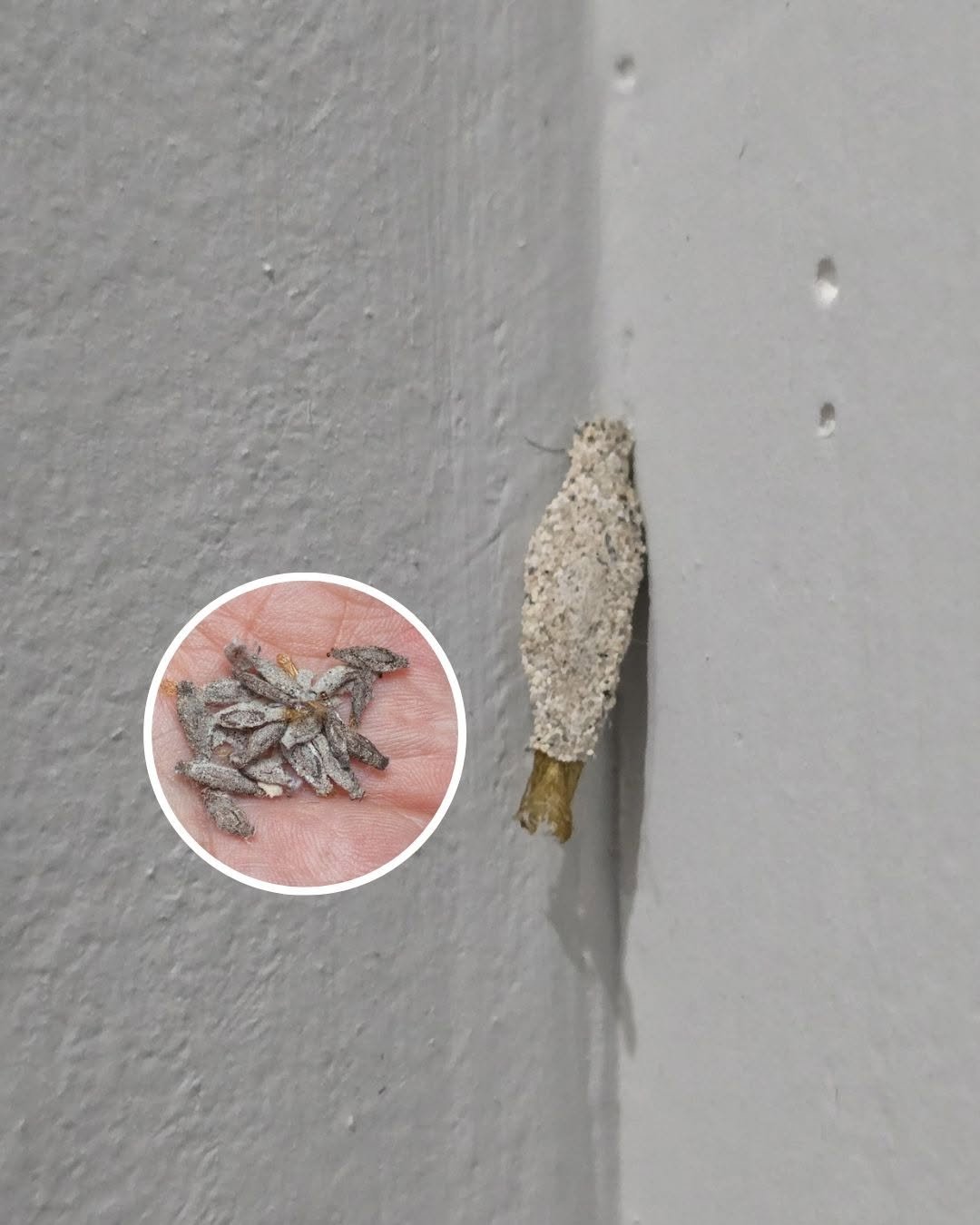
Digital media platforms frequently feature sensationalized home graphics and alarmist clickbait headlines claiming that encountering common household insects—such as case-bearing clothes moths—acts as an immediate warning of hidden toxic infestations, structural ruin, or severe domestic health hazards. These viral posts are specifically engineered to provoke disgust, panic, and rapid online sharing rather than providing accurate, evidence-based entomological or pest management education.
From an entomological and household management perspective, the small, spindle-shaped cases often found clinging to walls or corners belong to the household casebearer (Phereoeca uterella), a species of tineid moth larva. The caterpillar constructs a portable, silk case covered in tiny dust particles, sand grains, and debris, dragging it along as it moves. These insects feed on organic materials such as spider webs, dust, hair, shed skin cells, and occasionally natural fibers like wool or silk. While they can be a minor nuisance in wardrobes or damp areas, they do not bite, transmit human diseases, or compromise structural integrity. Sensationalized online narratives routinely frame ordinary domestic insects as terrifying household emergencies to manufacture fear and maximize user engagement metrics.
Managing household casebearers effectively involves reducing indoor dust and humidity, vacuuming regularly, storing natural fiber garments in sealed bins, maintaining proper home ventilation, and relying on professional pest management standards rather than alarming internet generalizations. Personal environmental decisions should always reflect objective home maintenance rather than online panic. If you face persistent, widespread pest issues or excessive indoor moisture, consulting a licensed pest control professional or building inspector provides safe, evidence-based direction.
Leave a Reply