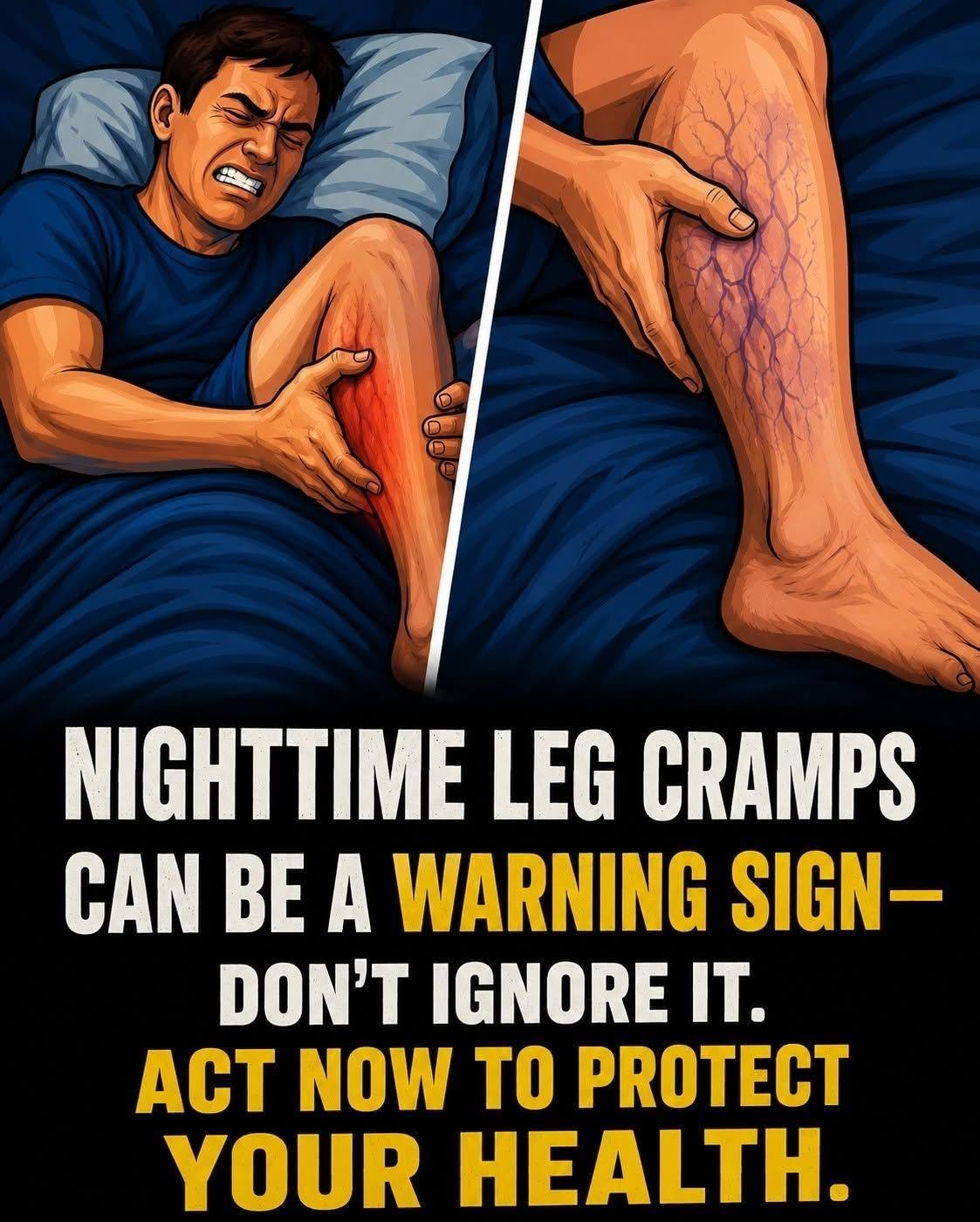
Digital media platforms frequently feature sensationalized medical graphics and alarmist clickbait headlines framing common nocturnal muscle contractions around catastrophic vascular diseases or imminent life-threatening emergencies. These viral posts are specifically designed to provoke health anxiety, fear, and rapid online sharing rather than providing accurate, evidence-based clinical or vascular education.
From a clinical and physiology perspective, nighttime leg cramps—commonly occurring in the calves or feet—are sudden, involuntary muscle spasms. While sensationalized graphics often illustrate glowing, highlighted veins to imply severe circulatory blockages or blood clots, the vast majority of nocturnal cramps are completely benign neuromuscular events related to muscle fatigue, physical strain, mild dehydration, electrolyte fluctuations, or prolonged sitting. While conditions like peripheral artery disease or deep vein thrombosis can affect the lower extremities, they typically present with distinct clinical signs (such as persistent swelling, localized heat, skin discoloration, or pain during exertion) rather than isolated nocturnal cramping.
Managing nocturnal leg cramps effectively involves maintaining consistent hydration, engaging in gentle calf stretches before bedtime, practicing regular low-impact physical activity, and relying on professional clinical guidance rather than alarming internet generalizations. Personalized health evaluation should always reflect a comprehensive physical exam and clinical assessment. If you experience persistent, severe leg cramps accompanied by swelling, redness, warmth, or leg numbness, consulting a licensed physician or vascular specialist provides safe, evidence-based direction.
Leave a Reply