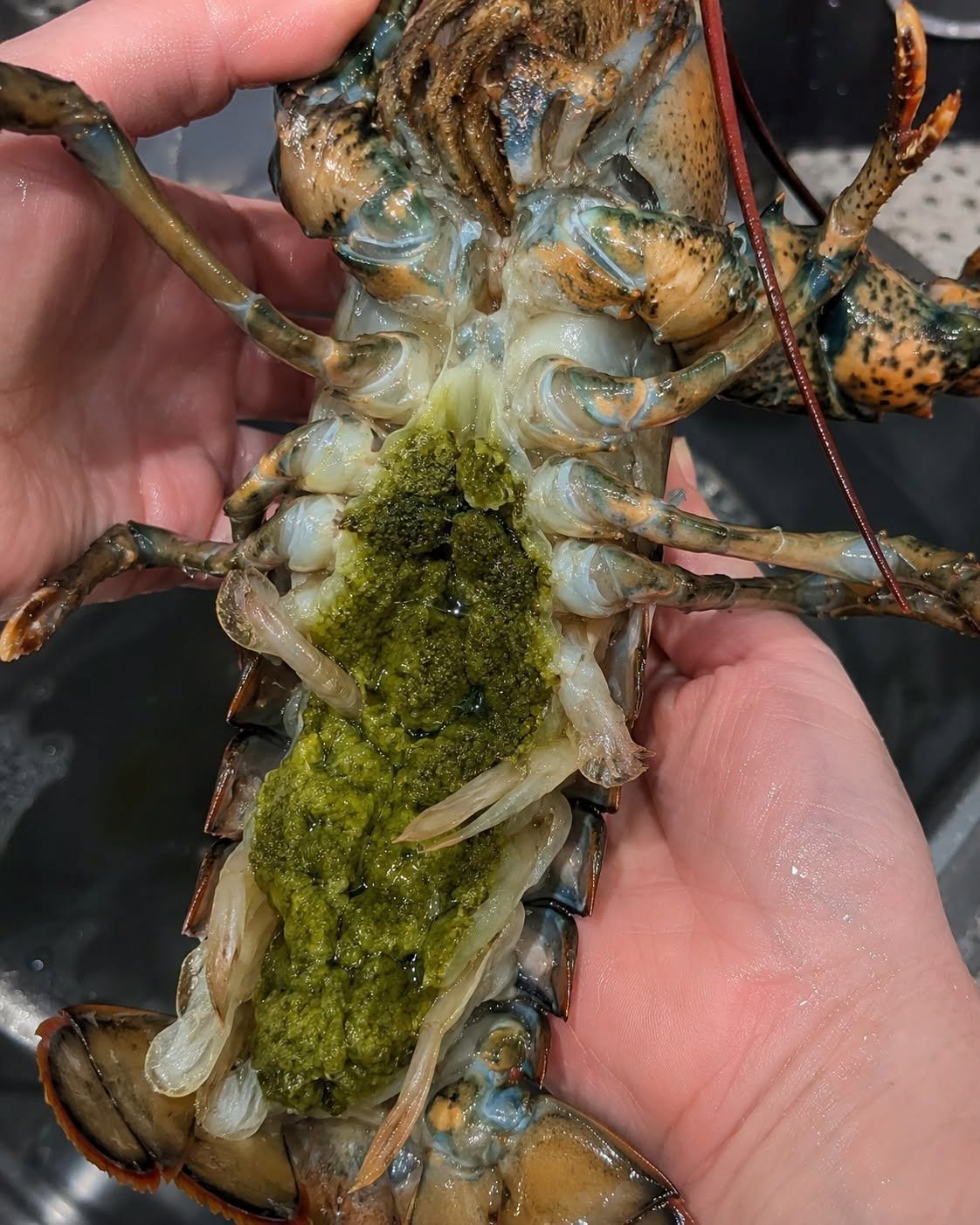
Digital media platforms frequently feature sensationalized close-up imagery and alarming warnings about ordinary culinary phenomena—such as finding green or dark matter inside seafood—to provoke anxiety, curiosity, and rapid online engagement. These viral posts are specifically designed to maximize digital interaction rather than provide accurate culinary or food safety education.
From a culinary and biological perspective, what is visible inside the lobster is tomalley (the lobster’s digestive gland or hepatopancreas, which filters toxins and turns green when cooked) or unfertilized roe (lobster eggs, which can sometimes appear greenish-black before turning bright red during cooking). While health authorities in certain regions advise limiting tomalley consumption due to potential environmental bioaccumulations like paralytic shellfish poisoning toxins, finding natural anatomical parts inside seafood is an ordinary biological reality rather than a mysterious health hazard.
Maintaining safe culinary practices involves sourcing seafood from reputable vendors, following proper cooking guidelines, adhering to local public health advisories, and relying on professional food safety standards rather than alarming internet generalizations. Personalized dietary choices should always reflect safe handling and sound clinical evidence. If you ever suspect food spoilage or have specific health concerns regarding seafood consumption, consulting a local food safety authority or healthcare professional provides safe, evidence-based direction.
Leave a Reply